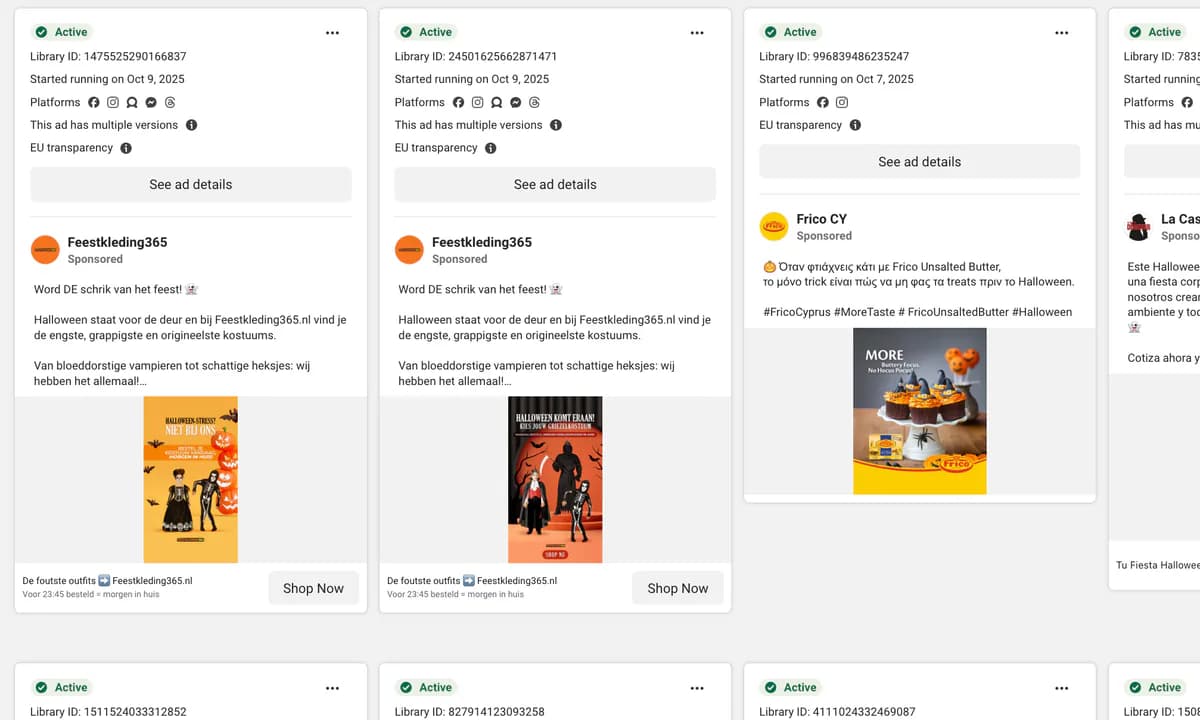
Find a Winning Product in 30 Minutes with Meta Ad Library + Insights
You don’t need an MBA or a 40-page deck to spot a promising product. You need a sharp process, a timer, and the right place to save what you find.
This 30-minute routine shows a practical way to run Meta Ad Library research, layer in Shopify-style signals, and turn the results into a simple go/no-go decision.
It’s designed for time-poor founders and growth leads who want quick product validation without guesswork. We’ll use a lightweight checklist and a clear set of proxy signals, then show where the Insights workflow keeps everything tidy.
Along the way, we’ll highlight where to lean on automation and where human judgment still matters.
The 30-Minute Plan: A Repeatable, High-Signal Routine
Set a timer. Don’t aim for perfect—aim for consistent. The point is to create a repeatable cadence you can run daily or weekly. Each block below includes what to check in the Meta Ad Library and how to note it so it’s actionable. Keep the same scoring rubric every time so you can compare ideas objectively week over week.
---------------------
---------------------
Minute 0–5: Define the Question
- Pick one niche or product idea. Write the problem it solves in 1–2 sentences.
- List 3–5 seed keywords (synonyms, pain/benefit phrases, plural/singular).
- Decide your decision threshold: what evidence will qualify this idea for testing?
Minute 5–10: Build Smart Searches
- In the Meta Ad Library, combine a product keyword + one benefit or pain word.
- Add common misspellings and plural forms to surface more variants.
- Scan the first 30–50 results; open promising ads in new tabs.
Minute 10–15: Check Longevity & Iteration
- Longevity: how long has the ad (or creative family) been active?
- Iteration: how many near-variants exist (angle swaps, hooks, UGC vs polished)?
- Shortlist ads that show persistence plus a steady refresh cadence.
Minute 15–20: Check Breadth & Context
- Breadth: formats (Reels/Stories/Feed) and geographies in play.
- Offer design: anchors, bundles, scarcity, testimonial or UGC proof.
- Creative structure: hook → problem → proof → offer → CTA.
Minute 20–25: Pull Shopify-Style Signals
- Look for store presence and category momentum (who’s selling, how they position).
- Note brand signals: consistent positioning, review snippets, merchandising patterns.
- Capture 2–3 competitor product URLs to analyze further in the Insights workflow.
Minute 25–30: Decide & Document
- Score proxies: longevity (0–2), iteration (0–2), breadth (0–2). Shortlist ≥4/6.
- Draft the first test: 3 hooks, 2 offers, 1 audience or geo hypothesis.
- Save your notes, links, and screenshots in one place for the next pass.
---------------------
---------------------
Why 30 Minutes Works (and What It Doesn’t Do)
Speed forces focus. In half an hour you won’t predict lifetime value or seasonality—but you can decide if an idea deserves a small, controlled test. The goal is to reduce false starts and opportunity cost: collect enough high-signal evidence to justify a first sprint, then let real data confirm or reject the thesis. Think of this as a reliable gate, not a crystal ball.
What to Look For: Interpreting Meta Ad Library Signals
The Meta Ad Library doesn’t show spend, CTR, or ROAS for commercial ads—and that’s okay. Use realistic proxies and keep them consistent across sessions. Below is a simple rubric you can paste at the top of every session note.
- Longevity: multi-week continuity suggests the angle is paying its keep.
- Iteration: regular variant testing implies an active learning loop.
- Breadth: formats and geos—wider breadth often correlates with scale.
- Message-Offer Fit: does the story resolve the pain clearly with a believable offer?
- Social Proof: UGC, testimonials, before/after, credible authority signals.
Seed Query Bank (Steal These 20 Starters)
- “{niche}” + “problem”
- “{niche}” + “fix”
- “{product}” + “pain relief”
- “{product}” + “how it works”
- “{benefit}” + “at home”
- “{benefit}” + “before after”
- “{benefit}” + “UGC”
- “{benefit}” + “Reels”
- “{symptom}” + “solution”
- “{task}” + “faster”
- “{task}” + “without [pain]”
- plural/singular variants
- brand + generic term (e.g., “brandname posture”)
- misspellings (common typos)
- seasonal phrasing (gift, summer, winter)
- bundle phrases (2-pack, 3-pack, family)
- discount anchors (save, deal, bundle)
- credibility (doctor, expert, lab)
- materials (titanium, silicone, bamboo)
- use-case (office, travel, kids)
Comparison: Manual Library-Only vs. Library + Insights Workflow
| Dimension | Manual Meta Ad Library-Only | Meta Ad Library + Insights |
|---|---|---|
| Where your time goes | Manual: tab chaos and screenshot folders | Insights: structured notes and linked evidence |
| Finding patterns | Ad-hoc; easy to over-weight a single viral ad | Scored proxies; side-by-side examples |
| Turning research into tests | Loose bullets in a doc | Pre-formatted test backlog (hooks, offers, audiences) |
| Team sharing | Docs drift, links break | Single source of truth with saved analyses |
| Speed to decision | Slow, re-work heavy | Fast, repeatable—find winning products fast |
Hook & Angle Patterns (Use Ethically, Rebuild in Your Voice)
- Problem-to-relief in 3 seconds
- ‘I tried everything’ UGC confession
- Authority shortcut (expert or proof device)
- Before/after transformation
- Micro-demo of the one clever mechanism
- Quantified promise with small, believable numbers
- Social proof carousel (quotes, stars, press)
- Objection-first angle (tested on sensitive skin, pet-safe)
- Cost-of-inaction (what happens if you don’t fix this)
- Time-to-value (setup in under 3 minutes)
- Bundle math (anchor + savings, no gimmicks)
- Seasonal fit (giftable, travel-ready, back-to-school)
Offer Levers to Test (Don’t Stack Them All at Once)
- Anchor price + round-number bundle
- Free shipping threshold
- Limited color or edition to create urgency (without fake scarcity)
- Bonus accessory or refill with bundle
- Simple warranty/guarantee phrasing
- Starter vs. Pro package naming
- Buy-more-save-more ladder
- Subscribe-and-save (if refills make sense)
- Cross-sell packs (complimentary SKUs)
- Seasonal code with clear end date
Quick Red Flags (Skip for Now)
- One creative running for days with no variants or refresh signs.
- Hype-heavy claims with zero proof elements.
- No clear pain–solution fit in the first 3 seconds of the creative.
- Offer math that looks too tight to leave margin after shipping and ads.
- Look-alike branding that risks confusion with bigger players.
Save It Once, Re-Use It Often: The Insights Workflow
Copy a promising product URL, paste it into Insights, and save an analysis. Over time, you’ll build a gallery of candidates with your own scores, examples, and next steps. The outcome: a quick product validation system that gets smarter with every session—because yesterday’s notes are right where you need them. The Insights workflow also encourages consistent naming and versioning so your team can re-analyze in minutes.
---------------------
---------------------
A 30-Minute Example: From Idea to First Test Plan
Scenario: you’re considering a posture-support accessory for remote workers. You search pain phrases (neck strain, desk posture), find multiple creative families active across Reels and Feed, and notice a steady flow of UGC variants. Two brands show multi-week persistence and clean offer design (anchor price with bundle savings). Your proxy score hits 5/6, so you green-light a test and write a one-pager.
- Hooks to test: “Workday pain to relief,” “Doctor-approved posture,” “3-minute setup.”
- Offers to test: anchor at $39 with a 2-pack bundle; add free shipping threshold.
- Audience/geo hypothesis: WFH interests + ergonomics affinity; start in one English-speaking market.
- Measurement plan: CTR, view-through rate on hooks, add-to-cart as early conversion.
Next 7 Days: Keep the Flywheel Turning
- Day 1–2: run the 30-minute routine on 3 ideas; shortlist one to test.
- Day 3: ship a tiny creative test with 3 hooks and 2 offers.
- Day 4: review early indicators; retire the worst hook.
- Day 5: add one new angle inspired by yesterday’s research.
- Day 6: check Insights for saved notes; promote the top variant.
- Day 7: document learning; queue two new ideas for next week.
FAQs
Can I really validate in just 30 minutes?
You’re not proving a lifetime business—just deciding if a small test is worth it. Consistency beats perfection.
Is this legal and safe?
Yes—use public transparency tools as intended, don’t copy IP, and document sources/dates cleanly.
What if my niche is crowded?
Crowded markets still have angle gaps. Look for underserved pains or better offer packaging.
Do I need a big budget to test?
No. Start small, learn fast, and scale only the angles that earn their keep.
Resources & Links
If you want more details or prefer a walkthrough, you can explore common questions, review plan options, watch a short demonstration, or try a simple live test. To keep your reading flow clean, we’ve placed the links here near the end.
Free Trial: How to Sign Up for Insights - Powered by Trampolin.ai
Create your account, paste your first product URL, and review your dashboard within minutes. The 14-Day Free Trial is no credit card required. When you’re ready, start on the signup page.