Breakout Finder: Spot Product Winners with Meta Ad Library & Shopify Signals
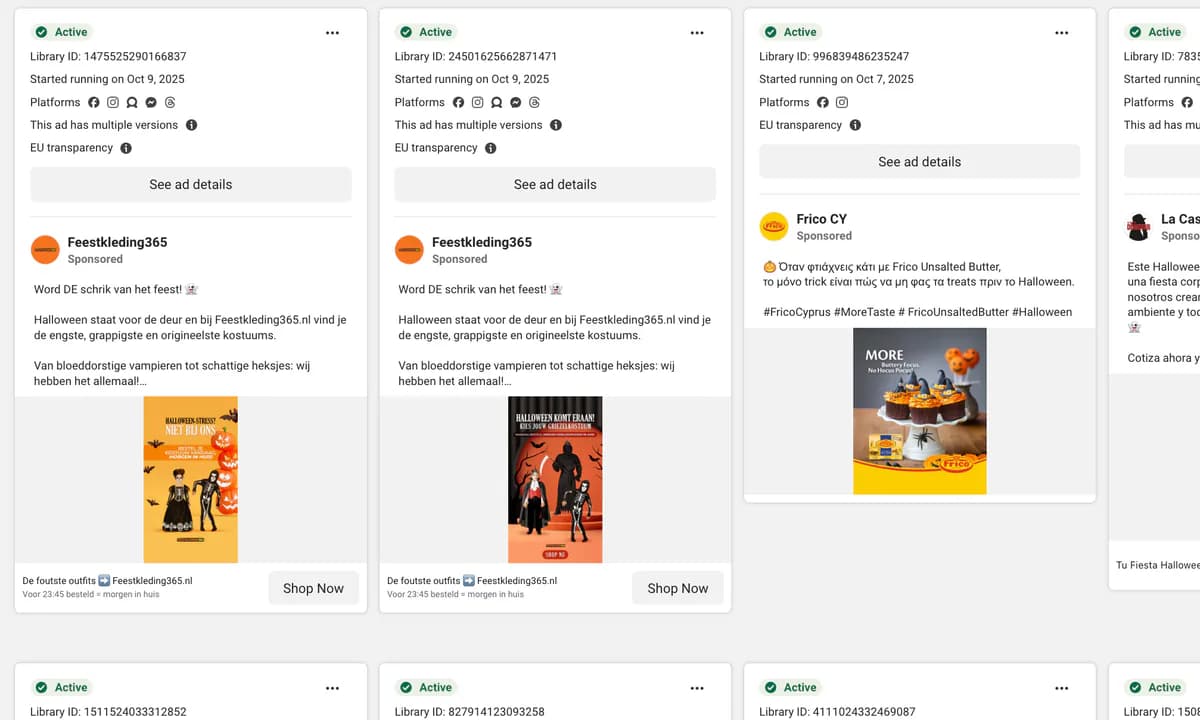
Let’s be honest: most “winning product” advice is a vibes-based treasure hunt. You scroll endlessly through the Meta Ad Library, bookmark a few flashy creatives, and hope your media buyer’s sixth sense pays rent. Meanwhile, ad prices creep up, copycats swarm in, and the product you picked turns out to be a one-week wonder. This guide replaces hunches with a simple, repeatable Trend Radar—a way to predict breakout products by combining what ads reveal (demand) with what stores reveal (supply and intent). We’ll show how to read momentum in the Meta Ad Library, how to cross-check it with Shopify signals, and how Insights – Powered by Trampolin.ai turns that workflow into a 3-click habit.
Why Product Breakouts Are Predictable (If You Watch the Right Signals)
Breakouts rarely come from nowhere. They leave fingerprints: a rush of new creatives on Meta, a lift in spend behind a single angle, fresh landing pages, and store-side tells like inventory push, bundle experiments, or review velocity. When you blend these footprints into one picture, you get a leading indicator of what will sell tomorrow—not a post-hoc excuse for what sold yesterday.
Our Trend Radar looks at three families of signals:
1) Creative momentum (how quickly high-quality ads are appearing and scaling),
2) Engagement authenticity (are clicks, comments and saves tracking with spend?), and
3) Store signals (does the site behavior match a brand preparing for volume?).
Together, those give you a probabilistic edge without needing a crystal ball—or a lucky influencer mention.
------------------------
------------------------
Signal Family #1: Creative Momentum in the Meta Ad Library
Think of creative momentum as a velocity score. A single good ad is interesting; a cluster of related creatives, tested headlines, and rapid iteration is telling. Practical reads to make inside the Meta Ad Library:
- Velocity of new creatives: If a brand goes from 1–2 ads to 10+ variants in a week, they’re hunting for the winning angle—or they already found it.
- Angle convergence: Early tests are wide; winners narrow. Watch when most variants anchor around one promise (e.g., “pet hair gone in 3 minutes”) or one format (UGC demo + 6-sec hook).
- Budget posture (inferred): You won’t see spend, but you will see tells—identical creatives localized for multiple markets, refreshed edits to avoid fatigue, or frequent re-uploads to reset learnings.
- Freshness vs. fatigue: Are “best” creatives 2–3 weeks old and still alive? Good. Are they 2–3 months old with no iterations? Red flag.
Signal Family #2: Engagement Authenticity (Clicks > Clout)
Creative hype means nothing if the audience doesn’t move. You’re not chasing likes; you’re chasing response. Use a simple sniff test: if comments are growing but ad permutations stagnate, the creative may be entertaining—not converting. Conversely, when permutations jump and formats vary (square/reel/story), brands are usually following response with budget.
- Format diversification: If a product jumps from static to UGC to bite-size product demos, they’re mapping high intent across placements.
- Hook stability: When the top 3 hooks barely change while everything else evolves, that hook is probably driving ROAS.
- Call-to-action clarity: Winners get blunt—“Try it today” instead of “Learn more.” Watch when CTAs get shorter as spend rises.
Signal Family #3: Shopify Store Signals (Supply, Intent, Readiness)
Store-side, you’re looking for purchase intent and operational readiness. If a brand expects to scale, the store telegraphs it:
- SKU presentation: Bundles, starter kits, or subscribe-and-save modules reveal plans to raise AOV and LTV.
- Review velocity and recency: A healthy trend is new, specific reviews flowing in weekly, ideally referencing the ad promise (“works in 3 minutes”).
- Price clustering: Competitors converge to a psychologically safe price band (e.g., 29–39 EUR). Big outliers usually correct or vanish.
- Checkout friction: Fewer fields, express wallets, and localized shipping/returns—signs the funnel is being sanded for scale.
Putting It Together: A Practical Momentum Score (0–100)
You don’t need a black-box model; you need a consistent rubric you can apply daily. Here’s a simple 5-factor score you can calculate on a notepad. Each factor is worth up to 20 points; 70+ suggests a breakout candidate you can test quickly.
- Creative Velocity (0–20): Number of new, distinct creatives in the last 7–14 days relative to the prior period.
- Angle Convergence (0–20): Degree to which copy and visuals align around one claim or demonstration.
- Format Spread (0–20): Coverage across placements (Reels/Stories/Feed) with native-looking edits.
- Engagement Authenticity (0–20): Real comments, saves, tagged user videos—not just hearts.
- Store Readiness (0–20): Evidence of bundles, optimized checkout, recent reviews, and localized details.
Seasonality Without Guesswork: A Quick Calendar
Breakout timing isn’t random. Many categories have predictable lift windows. A few examples to seed your radar:
- Q4 Gifting: compact gadgets, novelty kitchen tools, premium stocking-stuffers under 40 EUR.
- Jan–Feb Reset: fitness aids, posture and recovery tools, planner/notion-adjacent productivity items.
- Spring Clean: pet hair removers, de-fuzzers, odor eliminators; visual “before/after” plays great in Reels.
- Summer Outdoors: portable cooling, beach fitness, anti-chafe solutions, travel organizers.
- Back-to-School: dorm-friendly organization, desk accessories, compact blenders or coffee kits.
------------------------
------------------------
Micro-Niche Examples (and Why They Work)
Micro-niches let you enter noisy categories from the side door. Instead of “pet groomer,” think ‘short-hair couch saver’. Instead of “kitchen gadget,” think ‘no-plug frother for camping vans’. The ad angle is tighter, the audience is easier to target, and competitors are fewer.
- Pet / Home: A low-mess pet deshedder positioned as a “5-second couch rescue.” Visual proof sells; UGC > studio shots.
- Wellness: A posture-cue strap marketed for “remote work recovery” with 2-week progress clips.
- Home / Cleaning: A stain-lift pen framed for “Airbnb turnovers”—B2B-ish use case with repeat buyers.
- Hobby: A modular cable organizer pitched to “FPV drone pilots” instead of generic cord storage.
Your 30-Minute Daily Trend Radar Workflow (Repeatable)
Here’s a lightweight loop you—or a VA—can run every morning. Consistency beats late-night brainstorms.
- Scan Meta Ad Library: List 10 products with creative velocity (≥5 new variants this week). Note hooks that repeat.
- Check Store Signals: For each product, glance at price point, bundles, review recency, and checkout friction.
- Score Quickly (0–100): Use the five-factor rubric; shortlist anything ≥70.
- Run a Micro-Test: 2–3 ad angles, broad + one interest stack, lowest operational lift first.
- Escalate Winners: New creatives every 2–3 days to ride momentum; introduce geography/creative variants before fatigue.
How Insights Makes This Frictionless
You can do all of the above manually, but it’s slow. Insights compresses the process into seconds. Paste a product URL—we fetch Meta Ad Library creatives linked to that product, stitch them with store signals, and surface the patterns: hook clusters, freshness, placement spread, and store readiness. The result is a single view that tells you what’s scaling, why it’s scaling, and the likely angle to test next.
- URL-in, insights-out: No hunting. Drop a Shopify product URL and see connected creatives and store signals in one place.
- Creative fatigue radar: Detect stalling ads so you can pivot before CPA creeps up.
- Market coverage: Track which countries/placements the brand is lighting up to plan your next market test.
- Simple pricing and a 14-day free trial: Start small, grow when the workflow prints value.
Free Trial: How to Sign Up for Insights - Powered by Trampolin.ai
Ready to turn Trend Radar into a daily edge? Start a 14-day free trial—no credit card required—on the Signup page. Prefer to see it in action first? Watch the short Live Demo or try a Free Live Test with your own product URL. For plan details, see Pricing, and for common questions visit the FAQ. Create your account, paste a URL, and follow the signals. The sooner you start, the sooner you catch momentum.